
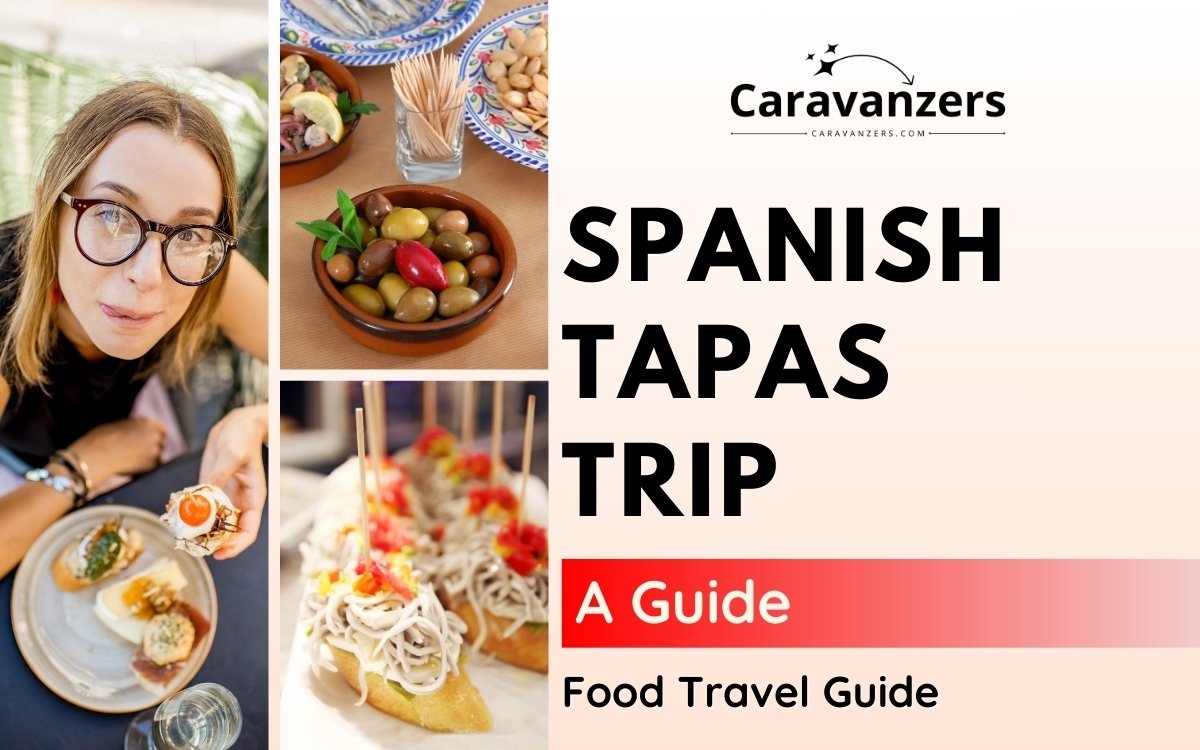
Spanish tapas. This guide has everything you need to know to plan these fun meals in your next trip to Europe!
Of course, Spain is one of the most popular European countries. As a result, millions of travelers arrive in this Mediterranean country.
And one of the best things about it? Enjoying the bite-sized tapas!
So, in this guide, we will explore its history, regional varieties, and even how to enjoy them.
Therefore, if you’re planning a trip to Spain, keep reading.
Spanish Tapas Basics
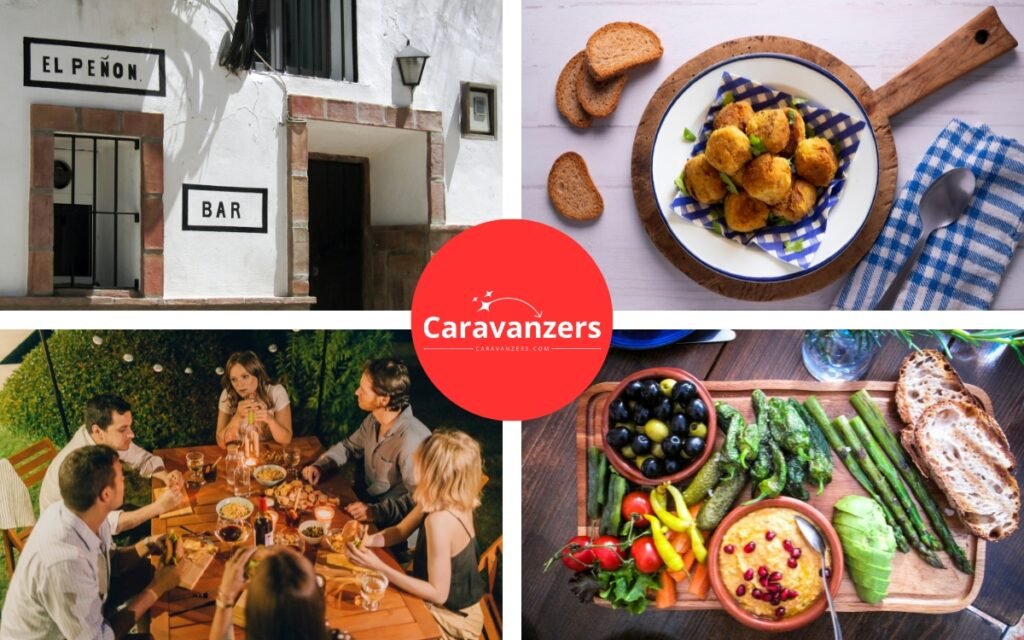
Spain is home to some of the best foods in the world. Yet, this guide uses the phrase “Spanish tapas” because other cultures have similar concepts to it.
For example, in Italy, small plates called “cicchetti” are available in Venetian bars. Like the Spanish tapas, the cicchetti are a variety of bite-sized dishes.
Similarly, in Greece, “meze” consists of small appetizers like olives, cheese, and dips.
In Spain, tapas are small plates of food. People usually serve them as appetizers, snacks, or light bites.
The idea is to enjoy a variety of different dishes in one meal, and tapas are perfect to share in a group.
So, they range from simple olives or nuts to elaborate preparations with seafood, meats, or vegetables.
Meanwhile, the word “tapas” comes from the Spanish verb “tapar,” meaning “to cover.”
As a result, tapas serve as a way to cover wine glasses. You will notice how usually it is with a slice of bread or meat, keeping out flies and dust.
These small food portions evolve into a more elaborate and integral part of Spanish dining.
Therefore, in Spain, tapas create a social experience. People go from bar to bar (called a “tapeo”), enjoying a few tapas at each stop.
In other words, this casual, convivial way of eating nurtures the chance to connect and enjoy.
Spanish Tapas by Region
Spanish tapas are not all the same. The country has several regions that are famous for their exceptional tapas. As you will see, each presents distinctive flavors.
For example, in Andalusia, tapas represent the cultural mix, with a dash of coastal influences.
Andalusian people love their tapas like gambas al ajillo (garlic shrimp) and pescaíto frito (fried fish).
Of course, Andalusian cities like Seville and Granada are full of tapas bars, where a drink comes with free tapas.
In Madrid, the tapas scene is lively and diverse. From callos (tripe stew) to bocadillo de calamares (calamari sandwich), the nation’s capital will give you plenty to try.
And then there is the Basque Country, particularly San Sebastián and Bilbao. This region is famous for pintxos, small bites served on slices of bread.
The Basque Country loves their regional ingredients like seafood, meats, and local cheeses.
Meanwhile, Catalonia has a unique twist with tapas. You will find pa amb tomaquet (tomato bread) and escalivada (grilled vegetables).
And, in Galicia, tapas feature fresh seafood. You will find popular ones like octopus (pulpo), clam dishes, and empanada gallega.
So, as you travel across the country, expect that local flavors present a region’s heritage and charm.
How to Enjoy Spanish Tapas
Spanish tapas are a social, relaxed experience. The roots of this experience is in sharing and conversation.
As a result, the typical etiquette is ordering a variety of small dishes to share among friends or family.
It’s common to order several tapas at once, but you can also order more throughout the meal.
Of course, you should definitely pace yourself. This will mean savoring each bite and enjoying the communal aspect of dining.
Meanwhile, tapas are in full gear in the late afternoon or evening. Lunch is usually between 1:30-3:30 PM.
Between lunch and dinner, the Spanish indulge in “siesta” (napping). In traditional villages and smaller cities, this time of day will be like a ghost town.
Then, dinner is on after 9:00 PM, and it’s common to go from bar to bar (a tradition called tapeo). This is a tradition of sampling a few tapas at each stop.
Also, tipping is not mandatory but welcome, especially if the service is exceptional.
Drinks like beer, wine, or sangria will usually accompany tapas, and each drink typically comes with its own tapa in some regions.
So, the experience is informal, with a focus on enjoying good food, drink, and company in a lively, casual setting.
Top 10 Tapas Dishes
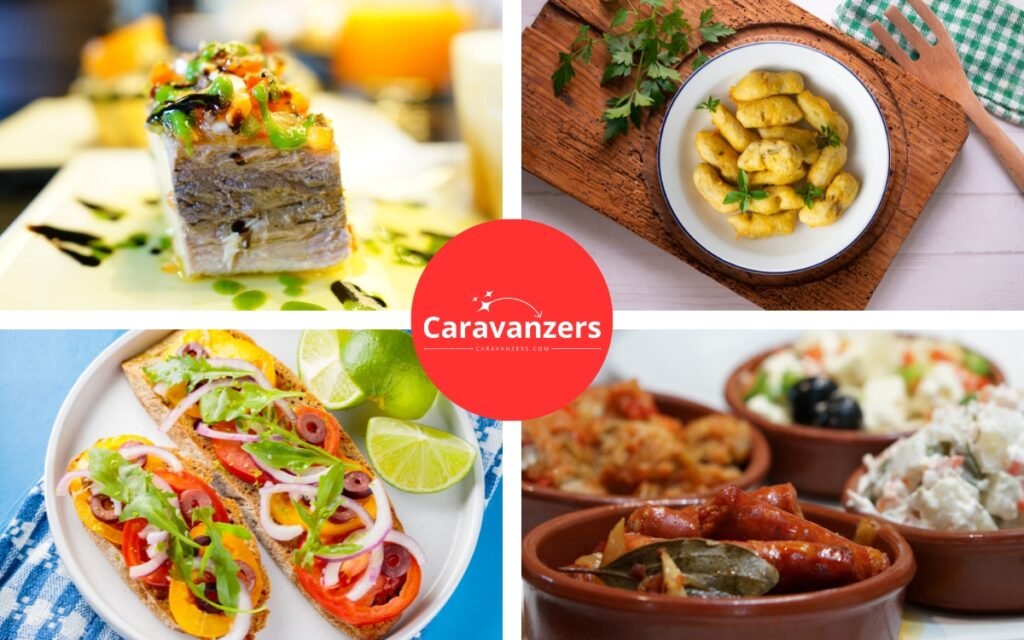
Spanish tapas come in a range of flavors and textures. These flavors and textures represent the diversity of Spanish cuisine.
First of all, start with tapas simples. These tend to be super mild and without elaborate preparation. Expect basic ingredients like olives, nuts, or bread.
Patatas bravas are some of my favorites. These tapas feature crispy fried potatoes served with a spicy tomato sauce and creamy garlic aioli.
Tortilla española is another popular type. These tapas bring together eggs, potatoes, and onions in a thick, savory omelette.
Of course, croquetas are crispy, golden croquettes filled with smooth béchamel and various fillings like ham or cheese.
Meanwhile, gambas al ajillo are delicious shrimp cooked in garlic, olive oil, and a touch of chili.
Also, the calamares a la romana is a fun one that presents lightly battered and fried squid. Expect to enjoy these with a squeeze of lemon.
Another popular one is the pimientos de padrón. These use a mix of mild and spicy peppers, sautéed in olive oil.
Boquerones are also super popular. These tapas bring marinated anchovies, bright with vinegar, garlic, and parsley.
You also don’t want to miss the albondigas. Expect flavorful meatballs in a rich tomato sauce.
Finally, try the pan con tomate. These tapas are toasted bread topped with ripe tomato, garlic, and olive oil.
What to Avoid
As you go about sampling Spanish tapas, there are a few things to avoid. First of all, avoid sticking to just tourist-heavy spots.
Instead, explore local bars for authentic experiences. Just follow the locals and you will find hidden gems.
Of course, don’t rush—take your time to enjoy each tapa and savor the flavors. You may notice the waters take long to bring you the tapas, as they are made to order.
Meanwhile, avoid over-ordering. Tapas are great to share in a leisurely way, not to eat it all in one sitting.
Be cautious with excessive tipping, as it’s not an expectation in most tapas bars. However, small tips are welcome for good service.
And, of course, avoid comparing regional tapas. Each area has its own specialties, and trying local dishes is part of the cultural experience.
Embrace variety and experiment with new flavors!
Final Thoughts
Spain is a paradise for foodies. This is because of the country’s incredible culinary diversity, regional specialties, and the focus on fresh, high-quality ingredients.
From tapas to seafood, paella, and world-class wines, Spain is truly delicious. So, for your trip, expect colorful flavors and an inviting, communal dining culture.
That is literally what makes Spain a must-visit destination for food lovers.
Enjoy Spain!
Nina Walker is a food writer for Caravanzers.
Follow us on Pinterest.