
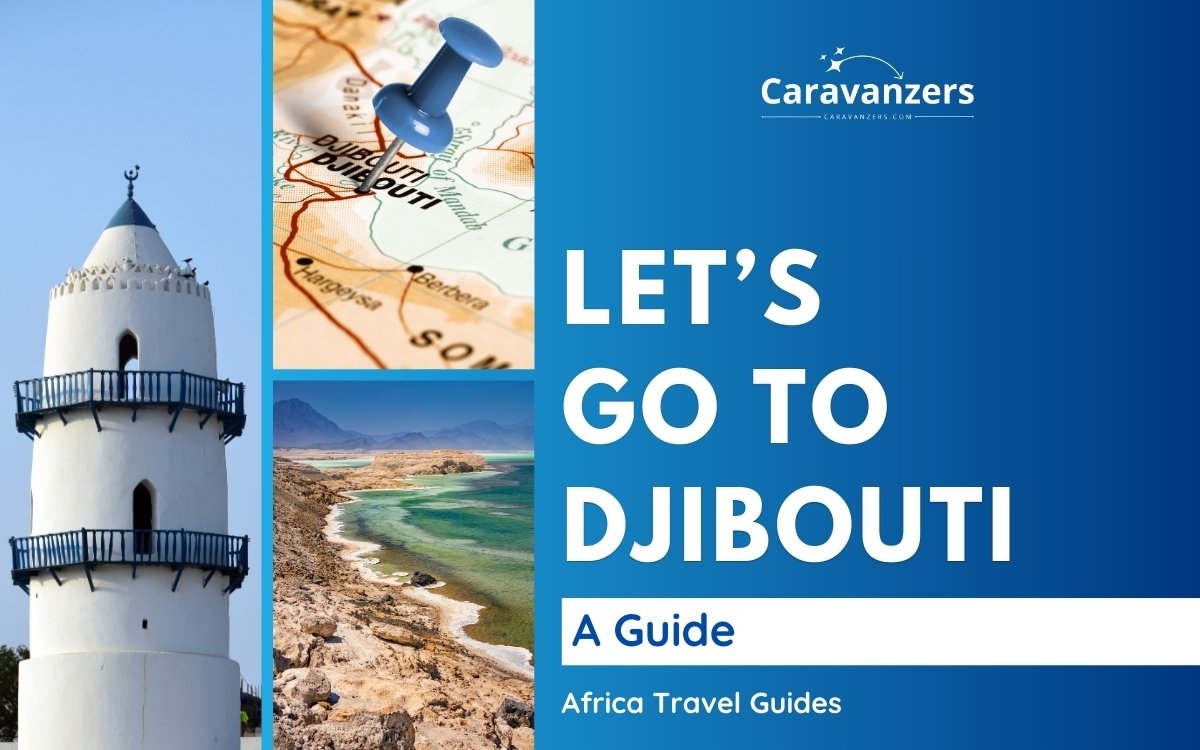
Djibouti travel guide. Here is your ultimate guide to explore one of Africa’s best kept secrets, featuring trip planning ideas to use.
Talk about adventure travel aesthetic. Djibouti is a fascinating destination with unique geological features, a key maritime crossroads, and colorful marine life.
In this guide, you will get to plan your trip, from arrival to attractions, and so much more. This includes a 7-day itinerary to mimic for own trip.
So, if you’re going to Africa, keep reading!
Djibouti Travel Basics
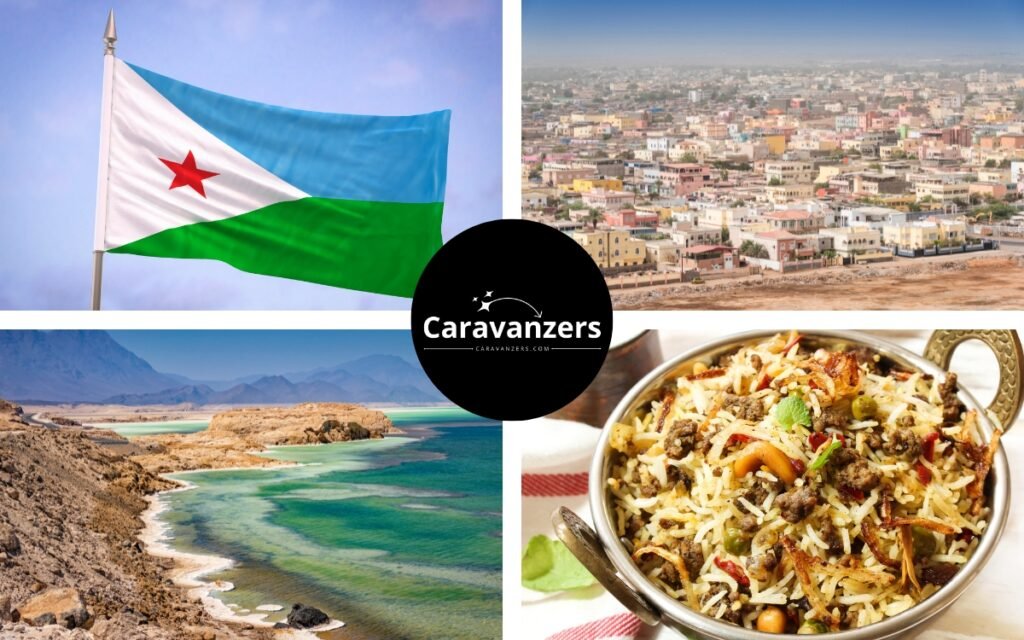
Like Ethiopia and Somalia, Djibouti is in the Horn of Africa. Because of its strategic location, there is a diverse culture and unique landscapes.
Major cities include Djibouti City, the capital. This is a busy port city with a mix of modernity and tradition.
Tadjoura is the oldest town, with coastal beauty and historical sites, and Ali Sabieh is in the southeast, with rugged terrain and proximity to the Somali border.
To visit, you’ll definitely need a valid passport and a visa. However, most foreign travelers will be able to get the visa on arrival or online.
The main international gateway is Djibouti-Ambouli International Airport (JIB). As with many airports in the region, it’s pretty simple but functional.
Meanwhile, the local currency is the Djiboutian Franc (DJF), though US dollars are widely in use.
Taxis are available at the airport, with fares typically negotiated in advance. I would encourage you to confirm the price before starting the journey. The initial fare is 500.0 DJF (about $3), with an additional charge of 500.0 DJF for each kilometer traveled.
English and French are widely spoken, especially in tourist circles. That said, though, you should know that Djibouti was a French colony, and the local languages are Somali, Afar, and Arabic.
Of course, this is a Muslim-majority country and you will need to dress modestly if you’re visiting any cultural areas.
Men should wear pants that go below the knee and never shirtless. Women should wear a dress that covers chest, shoulders, and goes below the knee.
If you’re planning to visit a spiritual site, including mosques, women will need to cover their head.
When to Go
Make sure to take travel essentials into consideration for this trip. A Djibouti travel is mostly a dry, hot experience, and you need to prepare for that.
Generally speaking, the best time to visit Djibouti is between November and February. This is during the cooler dry season.
For this period, temperatures are more moderate. For example, it will be ranging from 25°C to 30°C (77°F to 86°F).
This is definitely the more comfortable season for outdoor activities like exploring the desert, salt lakes, and coastal areas.
Meanwhile, the summer months (June to September) are extremely hot. Expect temperatures to exceed 40°C (104°F).
If you’re keen on marine activities, such as diving and snorkeling, the clear waters are best during the cooler months.
However, you definitely should avoid the rainy season. This season is pretty short, just from March to May. Expect heavy rainfall that may disrupt travel plans.
Finally, if you want your trip to coincide with festivities, then there are a few other dates across the year. For instance, the most notable festivals are Eid and Mawlid al-Nabi.
Eid is either after Ramadan (Muslim fasting month) and during Hajj (the Islamic pilgrimage). The dates depend on the Islamic calendar.
Same with Mawlid al-Nabi, a festival celebrating the Prophet Muhammad’s birthday.
Also, there is Independence Day (June 27), marking the nation’s liberation from French rule.
Where to Stay
Like other Muslim Africa destinations such as Egypt, you will need to plan your stays in advance. This is especially the case if you’re a woman or a member of the LGBT community.
In my opinion, the best areas for foreigners to stay are in the capital, Djibouti City. For example, staying near Place Menelik is great.
This in the heart of the European Quarter. I think this area gives you easy access to the city’s markets, restaurants, and cultural attractions.
In terms of hotels, both Sheraton Hotel and Kempinski Hotel are great. Of course, they are more suitable for those seeking more luxurious accommodations with excellent service.
Meanwhile, Ambouli is ideal for those with short stays or early flights, as the area is close to the airport.
The coastal regions, like Arta, are perfect for their beautiful beaches and resorts, for a more tranquil, scenic stays.
What to Eat
Food in this country is unique. There are various African, Arab, French influences converging to create a delicious cuisine.
Of course, if you’re adventurous, you must try camel meat dishes. This is a local delicacy that appears in various forms.
Also, you must try skoudehkaris. This is a rice dish that is full of spices, vegetables, and meat. Expect to pair it with a tangy tomato sauce or bisbas, which is a yummy hot sauce.
For a lighter option, try sambusas. These are crispy pastries that have meat or vegetable fillings.
Meanwhile, laxoox is basically the national dish. This is a spongy flatbread that the locals serve with honey or savory stews.
Then, take advantage of some seafood. Fried fish, especially from the Red Sea, is extremely popular.
For dessert, sample halwa, a sweet treat made with sesame or peanuts, and don’t miss cafe Djiboutien, a strong local coffee.
Djibouti Destinations
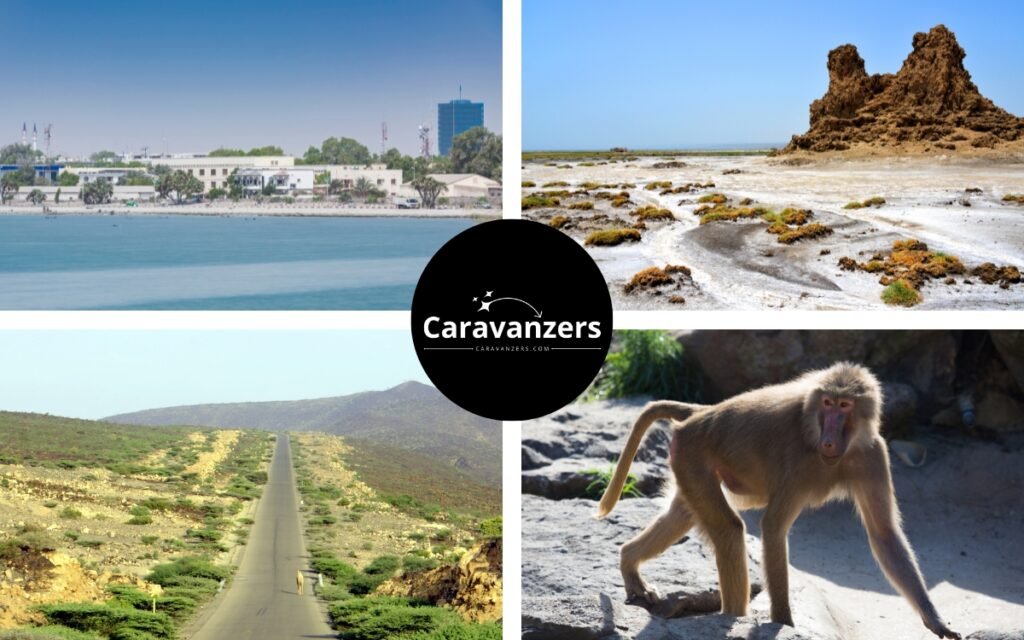
Your Djibouti travel means experiencing dramatic landscapes, with unique attractions for adventurous travelers. Start in the capital, Djibouti City.
You will be able to visit the Central Market. This is a lively spot where you will soak in the local culture, interact with vendors, and buy traditional handicrafts.
And, the Port of Djibouti will give you a glimpse into the country’s strategic location, while Place Menelik is an important historical and cultural center.
For a unique experience, visit the Moucha Island. This is a peaceful retreat about 30 minutes on a boat ride from the big city. Expect snorkeling, diving, and opportunities to observe the natural beauty of the coral reefs.
Of course, one of the most popular sites in the country is Lake Assal, about a 2-hour drive from the city.
This is the third-lowest point on Earth, in about 500 feet (or 155 meters) below sea level. It’s a saline lake is with a stark white salt flats around it in a surreal landscape.
Nearby, you will get to explore the Day Forest National Park. This is an arrid and mountainous area home to diverse flora and fauna. It’s also a great place to see baboons.
For those interested in geological wonders, the Ghoubbet al-Kharab (AKA the Devil’s Cauldron) is a unique experience. This destination has jagged volcanic rocks and crystal-clear waters.
Meanwhile, the Arta Beach and Tadjoura Bay are also very popular. These places have beautiful waters and peaceful atmosphere.
And if you have more time, venture to Lake Abbe. This lake is super cool, and you will get to see nomadic Afar people.
So, whether you’re looking to explore nature, history, or local culture, your trip to Djibouti has options.
Djibouti Travel Shopping
Start your shopping experience at the Central Market (Les Caisses Market) in Djibouti City. This is an outdoor shopping experience, where you will immerse yourself in the local culture.
For example, this busy market is the perfect place to find traditional goods, spices, colorful textiles, and handcrafted jewelry. It’s a great spot for picking up unique souvenirs or gifts.
For clothing, including items suitable for the hot climate, head to Bawadi Mall Djibouti off Rude de Vernice. This modern mall features stores that offer casual wear, comfortable outfits for exploring the country, and accessories.
Of course, you will also find local shops throughout the entire country. Tadjoura and Ali Sabieh, for example, have their own markets.
Finally, one of the best things to do for shopping is going to a textiles shop and having custom-made local outfits!
7-Day Djibouti Travel Itinerary
A 7-day Djibouti travel Itinerary is perfect for experiencing the highlights. You will get to exploe the capital’s culture, natural wonders like Lake Assal and Ghoubbet al-Kharab, and relax coastal escapes.
I think this gives you a well-rounded introduction to the country’s unique landscapes and attractions.
Use this as a guide:
Day 1 – Arrival in Djibouti City. Arrive in Djibouti City and settle into your accommodation. Explore Place Menelik, the heart of the city, and visit the Central Market for spices, textiles, and local crafts. Enjoy a seafood dinner by the coast.
Day 2 – Djibouti City Exploration. Spend the day at the Djibouti National Museum and stroll along the Corniche for views of the sea and nearby islands. Visit the Moucha Island for snorkeling or just relax on its beautiful beaches.
Day 3 – Lake Assal. Take a day trip to Lake Assal, one of the lowest points on Earth. Explore the white salt flats and turquoise waters, and enjoy photography and hiking.
Day 4 – Day Forest National Park. Visit Day Forest National Park for a nature walk and cooler temperatures in the mountains. Enjoy the lush environment and wildlife.
Day 5 & 6 – Arta & Ghoubbet al-Kharab. Relax at Arta Beach and explore Tadjoura Bay for water activities. On Day 6, visit Ghoubbet al-Kharab (Devil’s Cauldron) for volcanic landscapes and marine life.
Day 7 – Departure. Spend your final day shopping or relaxing before departing.
What to Avoid
For your Djibouti travel experience, there are a few things to avoid. First of all, avoid discussing politics. This is specifically with sensitive topics like the government or regional conflicts.
Criticizing local authorities could lead to unwanted attention, too. So, for example, if you see a bribe taking place between police and the locals, just mind your business.
Of course, petty crime, such as pick-pocketing and bag-snatching, does occur in crowded areas. I would say stay vigilant and secure your belongings.
Meanwhile, public displays of affection will definitely attract unwanted attention, so exercise discretion.
Djibouti is predominantly Muslim, so dress modestly and be respectful of local customs, especially during prayer times.
And, of course, avoid discussing religion or engaging in debates about it, as these can be sensitive subjects.
Finally, like everywhee else, be cautious when navigating unfamiliar areas, especially at night.
Final Thoughts
Your Djibouti travel means going to a destination that captivates with remarkable geological features, a maritime gateway with a dynamic culture, and a thriving marine life.
In this guide, you learned what it would be like to arrive, where to stay, what to eat, and even where to shop.
Of course, that’s in addition to the destination guides, as well as an itinerary to use for your own trip.
In other words, you have everything to plan an incredible experience.
Enjoy your trip to Djibouti!
AJ Paris is a travel photographer based in New York. He is the editor of Caravanzers.
Follow us on Pinterest.